



PRE-APPLICATION:
Apply the sealer to a small area first to ensure compatibility and the desired visual effect.
APPLICATION:
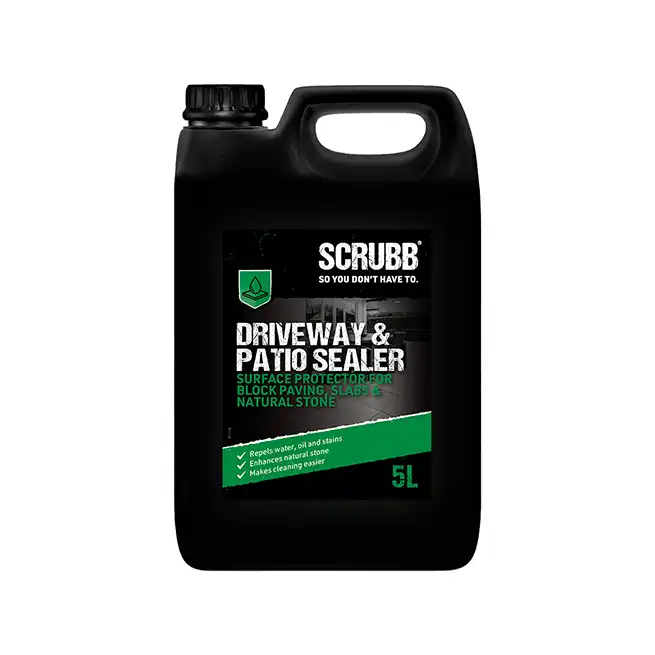
Ensure surfaces are thoroughly cleaned. After cleaning, let the area dry fully. Then, apply SCRUBB Driveway & Patio Sealer undiluted using a roller, brush or mop.
METHOD:
For highly absorbent materials or a stronger colour-enhancing effect, apply a second or third coat, wait 24hrs between each. Applying too much in one coat can result in a patchy appearance. Use thin, even coats.
It’s designed to seal and protect driveways, patios, and other stone or concrete surfaces, helping to reduce algae and mould growth while enhancing surface durability and appearance.
Coverage varies depending on the surface and dilution. Used neat, 5 litres covers around 30 square metres per coat. When diluted for pressure-washer application (50ml per litre of water), 5 litres will cover up to 200 square metres.
It is water-based.
Yes, it can be applied using a sprayer, brush, or roller. Use a roller for smoother surfaces and a brush for more uneven areas.
Yes, it’s suitable for patterned concrete as long as the surface has not been previously painted, coated, or sealed.
No, this product should only be used on untreated stone and concrete. It must not be applied over paint or any other sealer.
No, it won’t stop weed growth between paving joints, though it can help reduce surface algae and mould.
Yes, it does not affect the slip resistance of treated surfaces.
This can occur if rain falls before the sealer has fully cured. Allow adequate drying and curing time before exposure to moisture.
Got a question that’s not answered here? No problem, get in touch for expert help and advice.