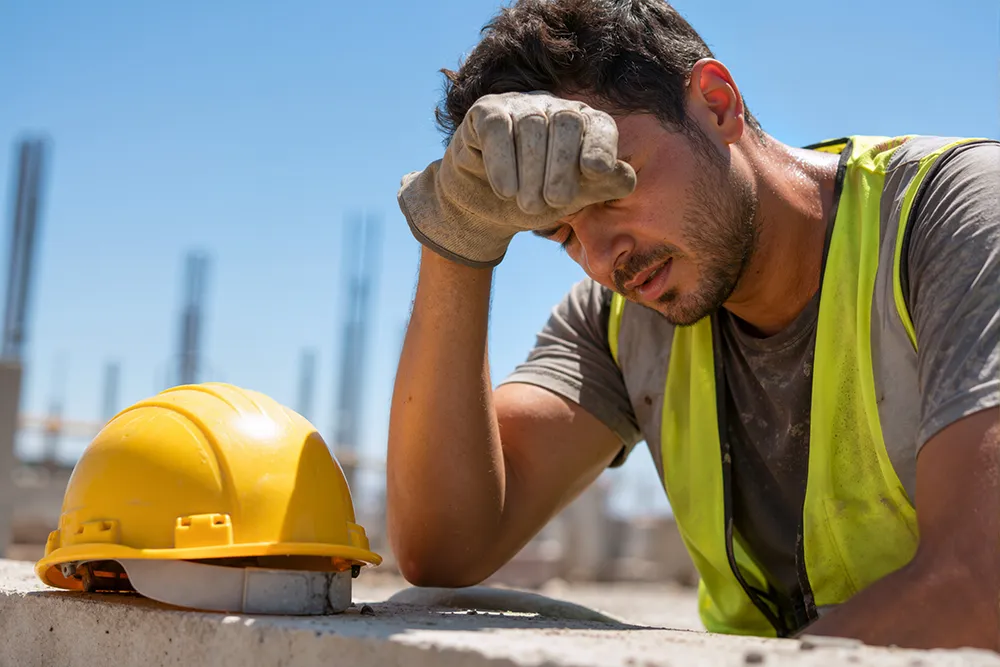
How can tradespeople stay safe working in hot weather?
Tradespeople can reduce heat-related risks by drinking regularly, taking breaks in the shade, using sun protection, recognising heat exhaustion and heatstroke, and scheduling heavy work for cooler parts of the day.
There’s no legal limit on how hot it has to get before outdoor work stops in the UK. No magic number on a thermometer that gets you sent home. In practice, that means the responsibility for staying safe sits with common sense and decent habits, not a rulebook.
If you’re on a roof, on a site, or in a van with the windows down all summer, here’s what’s actually worth knowing.
1. Drink more than feels necessary
The official guidance is specific: half a pint of water every 15 minutes when you’re working hard in the heat. Most people hear that and think “no way I’m doing that,” then don’t drink anything until lunch. The trick isn’t discipline, it’s positioning; water that’s actually within arm’s reach beats a full bottle sitting in a cool bag you never open.
Dehydration creeps up faster than people expect. By the time you feel thirsty, you’re already a fair way behind, which is why the advice is to drink before you need it rather than in response to it.
2. Shade and proper breaks aren't a nice-to-have
If you’re running a crew, building a few minutes of shade into the day at the right point is cheaper than dealing with someone who’s overheated and can’t finish the job. It’s not about softness. It’s just maths. A short break out of direct sun between 11AM and 3 PM, when UV is at its strongest, does more for the day’s output than pushing straight through.
3. The sun damage you don't see yet is the one that matters most
This is the one that tends to get ignored, because it doesn’t slow anyone down today. But the numbers are worth sitting with for a second: construction workers make up only around 8% of the UK workforce, yet account for roughly 44% of occupational skin cancer diagnoses. Outdoor workers carry an estimated 60% greater lifetime risk of skin cancer than people who work indoors, largely from years of repeated, low-level exposure that adds up far more than people realise.
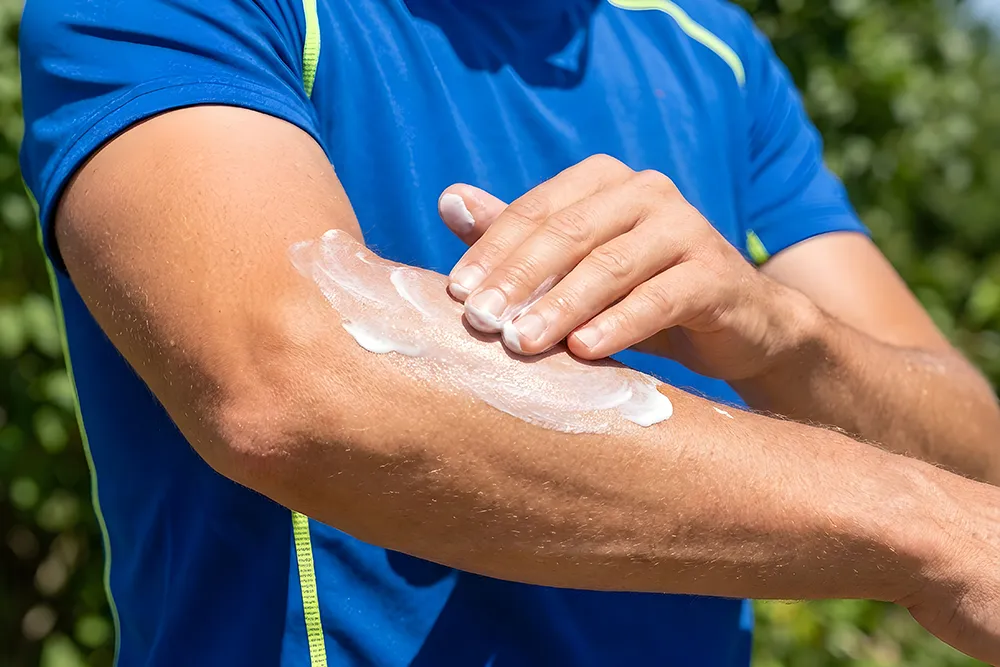
SCRUBB Sun Lotion is SPF 50 with UVA and UVB protection, formulated with Vitamin E and suitable for sensitive skin. Applied 15 minutes before sun exposure and topped up every 1-2 hours and always after sweating, it’s a 30 second habit rather than a routine you have to think hard about. It’s also worth pairing with the basics: shade in the middle of the day, and covering up where you can, since no lotion on its own is the whole answer.
4. Know the warning signs before they turn serious
Heat exhaustion and heatstroke aren’t the same thing and knowing the difference matters. Heat exhaustion looks like heavy sweating, dizziness, headache, nausea and tiredness—uncomfortable, but usually reversible with water, shade and rest. Heatstroke is the dangerous one: confusion, a rapid pulse, hot skin that’s stopped sweating, or someone who seems “off” in a way that doesn’t pass. If that happens, it’s a 999 call, not a “give it ten minutes and see.”
The tricky part on site is that people tend to push through the early symptoms because stopping mid-job feels like a hassle. So, make it a crew rule: if someone flags it, you stop and check on them, no questions asked.
5. Shift the heaviest work to the coolest part of the day
If a job allows any flexibility, starting earlier and getting the physically demanding work done before the late morning heat builds makes a bigger difference than almost anything else on this list. The hours either side of midday and into the afternoon are when heat stress risk climbs fastest, so saving lighter, less strenuous tasks for that window and the heavy lifting for first thing is a simple scheduling change with a real safety payoff.